
After the peaceful temples of Luang Prabang, our next stop took us to Vang Vieng. Surrounded by towering limestone karst mountains, this small town has become one of Laos’ most iconic adventure destinations. Once known primarily for its backpacker party scene, Vang Vieng has reinvented itself as a hub for outdoor adventure, with turquoise lagoons, hidden caves, scenic viewpoints, and hot air balloon rides drawing visitors from around the world. Although rainy weather changed some of our plans, it also gave us the chance to experience this remarkable landscape in a different way. Here’s how we spent two days exploring Vang Vieng.
About Vang Vieng
Located about halfway between Luang Prabang and Vientiane, Vang Vieng sits along the banks of the Nam Song River in central Laos. Home to a population of roughly 25,000 people, the town is surrounded by dramatic limestone karst mountains, lush countryside, caves, and natural spring-fed lagoons, making it one of the country’s premier destinations for outdoor adventure.

Vang Vieng wasn’t always known for its natural beauty. During the early 2000s, it gained international attention for its backpacker party scene, particularly the alcohol-fueled tubing excursions along the Nam Song River. Following a government crackdown on unsafe tourism practices, the town began reinventing itself as a destination centered on nature and adventure.

Today, visitors come to Vang Vieng to hike to panoramic viewpoints, explore caves, swim in the famous Blue Lagoons, kayak or tube down the Nam Song River. Also popular is rock climbing, ziplining through the forest, riding ATVs or motorbikes into the countryside, and even taking one of the world’s most affordable hot air balloon rides. Whether you’re looking for adventure or simply hoping to soak in some of Laos’ most spectacular scenery, Vang Vieng offers a little bit of everything.
Getting There & Getting Around
Laos was the only country where we traveled by train during our Southeast Asia trip. We took the Laos-China Railway from Luang Prabang to Vang Vieng, and later continued on to Vientiane. The stations were surprisingly modern- clean, spacious, and well-organized- which made the entire experience easy and efficient. The trains themselves were fast, comfortable, and equally modern.

The Laos-China Railway only opened in 2021, so it is still relatively new. Stretching more than 250 miles (400 km) from the Chinese border to Vientiane, it has transformed travel within Laos, making it much faster and easier to explore the country than in years past.

Once we arrived in Vang Vieng, tuk-tuks were lined up outside the station waiting for passengers. We took one to Sky Hotel, where we spent the next two nights. Throughout our stay, tuk-tuks seemed to be the primary mode of transportation unless visitors rented motorbikes to explore the surrounding countryside. One of my favorite sights that welcomed us when we arrived was this dog catching its own ride.


First Impressions of Vang Vieng
Vang Vieng immediately felt different from anywhere else we had visited in Laos. The landscape was unreal- sheer limestone cliffs rising on all sides- but the town itself felt like it was in transition. Modern hotels, cafés, and restaurants sat beside older or partially unfinished buildings, and there were stretches that felt almost quiet or underdeveloped.

We also visited during the rainy season, which added to the atmosphere. Some businesses were closed or slow, and the skies shifted quickly between heavy clouds and brief bursts of sun. Whether seasonal or structural, it gave Vang Vieng a feeling of a place still evolving. After checking into our hotel, we set out on foot toward one of Vang Vieng’s famous caves. The walk itself was lovely, passing small homes, local shops, and constant views of the surrounding limestone mountains.

Caves and Lagoons of Vang Vieng
Vang Vieng is known for having lots of caves and lagoons. We were on our way to visit Tham Chang Cave, one of the most accessible caves near town. It is located about 2 km (roughly a 1-mile walk) from central Vang Vieng, and we reached it by crossing a bridge over the Nam Song River before continuing on a short walk through the surrounding landscape. Admission was 30,000 Lao kip (about $1.35 USD) per person.

Before entering the cave, we spent time in the small natural swimming area below it. It was a simple, refreshing space where local families and travelers gathered to cool off from the heat. Children laughed as they leaped from wooden platforms into the water, while others swung from ropes before splashing into the pool below. Some people floated in the cool spring-fed water, while others relaxed in the shade along the riverbank. It had a lively but also relaxing atmosphere, and it was easy to see why it serves as a shared gathering place in town.
Experiencing this smaller swimming spot gave us a better sense of how central water is to life and tourism in Vang Vieng. The region is known for its network of Blue Lagoons. These swimming spots are scattered throughout the surrounding area of Vang Vieng. Each is filled with the turquoise, spring-fed water but offer a different atmosphere depending on how developed or remote they are. Some are lively and built up for visitors, while others are quieter and more secluded, often reached by motorbike or ATV.


Tham Chang Cave
After checking out the water we headed to the cave. Tham Chang Cave rises dramatically into the limestone cliffside above the river valley. A steep staircase leads up from the base, and as we climbed, the views opened out across the surrounding mountains and countryside.


From the outside, the entrance blends into the rock face, but once inside, the temperature drops noticeably and the sound of the outside world fades almost completely. What surprised us most was how quiet it was. Aside from a few other visitors near the entrance, we had much of the cave almost entirely to ourselves. That stillness made the experience feel even more surreal, like we had stepped into another world carved out over centuries.

Geologically, the cave is part of the limestone karst system that defines this entire region of Laos- formed over millions of years as ancient seas receded and water slowly carved out vast underground chambers. Inside, the cave opens into a series of large chambers carved over thousands of years by water moving through the limestone karst system. Stalactites hang from the ceiling in uneven formations. Narrow passages lead deeper into darker sections of the cave where natural light barely reaches. The scale of the interior was more impressive than we expected. Exploring it felt almost surreal. Being almost completely alone inside the cave made the experience even more memorable. Especially given the contrast between its cool, quiet interior and the hot, humid landscape waiting outside.


Eventually, we made our way back down the hillside and explored more of the area. There was a place to feed the koi fish, and a cute waterfall. Overall, it was a great place to spend the afternoon if you want to stick close to town.


Other Lagoons and Caves in Vang Vieng
While we only visited Tham Chang cave and the lagoon that is located there, the region is filled with other well-known spots:
- Blue Lagoon 1 (near Tham Phu Kham Cave) – The most famous and accessible lagoon in Vang Vieng, known for its turquoise water, rope swings, and nearby cave.
- Blue Lagoon 2 & 3 – Quieter alternatives with fewer crowds and a more relaxed feel.
- Blue Lagoon 4 & 5 – More remote options, often visited by ATV or motorbike.
- Tham Nam (Water Cave) – A unique experience where visitors float through underground river passages with headlamps.
- Tham Xang (Elephant Cave) – A smaller cave with cultural and religious significance tied to local legend.

A Sunrise Balloon Ride Above the Mountains
One of the most iconic experiences in Vang Vieng is taking a hot air balloon ride over its dramatic limestone landscape. In fact, Vang Vieng has become one of the most popular- and affordable- places in the world to go hot air ballooning. It was what really drew us to Vang Vieng in the first place.

Booking a Balloon Ride in Vang Vieng

Booking a ride was incredibly easy. Our hotel arranged everything for us, but we also noticed dozens of small travel agencies throughout town advertising balloon flights alongside tours, motorbike rentals, and other excursions. With so many operators, it’s clear just how popular ballooning has become in Vang Vieng. The company we traveled with was Above Laos.
Our day began early with a 4:30 a.m. pickup from Sky Hotel. A van collected us before making several more stops around town to pick up other passengers. As the streets remained quiet in the pre-dawn darkness, we drove just outside of town to an open field that served as the launch site. There a small shelter had been set up where everyone gathered for a safety briefing while the crew assessed the weather conditions. Low clouds still lingered over the mountains, so we had to wait about thirty minutes before conditions were safe enough to fly. Hot air ballooning doesn’t occur from July 15-September 15 because of the rainy season. Thankfully, hot coffee and tea were available while we waited. It gave everyone a chance to wake up, chat with fellow travelers, and watch the sky gradually brighten.

Riding High in Vang Vieng
Before arriving, each passenger had provided their weight so the crews could balance the baskets appropriately. We were divided into groups for two different balloons, and once the weather cooperated, the real show began. Giant fans slowly filled the colorful balloons with air before the powerful burners took over. Eventually the balloon and basket stood upright. It is hard to appreciate just how enormous the balloons really are until you stand beside them and they tower overhead.


Watching the balloons come to life was almost as fascinating as the flight itself. Within minutes, we climbed into the basket, listened to a few final instructions from our pilot, and gently lifted off the ground.

Up, up and away
The flight was partly cloudy, which gave the landscape a constantly changing mood. At times, thick mist wrapped around the limestone peaks, softening everything into shades of grey. It reminded me of our cloudy views in Sapa– quiet and almost dreamlike.


Then, just as quickly, the clouds would part. The valley would open beneath us- limestone karsts rising sharply from the mist, the green fields, and scattered villages stretching toward the horizon. Those brief moments of clarity made the scenery feel even more dramatic, revealing itself in layers.

The balloon also rose and dipped several times, giving us shifting perspectives throughout the flight. At times we were high above the entire valley. At other times we were floating just above treetops and rice fields, close enough to see everyday life below.


Because of these changes in height, we were even able to spot some of Vang Vieng’s popular viewpoints from above. These are the same ridges and hilltops that are usually reached by steep hikes or motorbike rides. At one point our balloon operator spun the balloon for 360 degree views, which you can see in the video below.
Final Thoughts about Balloon Rides in Vang Vieng
Vang Vieng is one of the most affordable places in the world to take a hot air balloon ride, but the experience feels anything but budget. When the ride was over (after almost an hour of riding) we landed in a field not far from where we took off. We then watched the workers quickly deflate the balloon and tear the whole thing down. We were taken back to the building where we celebrated with a glass of champagne, a breakfast of fresh fruit (have I mentioned how much mango I ate in SE Asia?!?) and were given certificates to commemorate the event. It ended up being one of the most memorable moments of our entire Southeast Asia trip. It was a reminder that sometimes the best way to understand a place… is from above..


A Slow Afternoon
After the early morning flight, we were forced to slow things down. Some heavy rain had us napping, reading and spending part of the afternoon back at our hotel watching Netflix. We did take a break to head out for snacks and a few bottles of Beerlao Lemon. We were lucky that next door was a small open-front market selling snacks and drinks. They were really littered all over the streets but we didn’t have to go far in to the rain to get some refreshments.
Sidenote- we stuck to bottled and canned during our time in Vang Viang drinks based on advice from other travelers and locals. We quickly became fans of Beerlao—especially the lemon version.
Erin even got some pool time in, and it was actually nice having the forced downtime. This was especially true after all the places we had already been to, and the places yet to come. Our time in Vang Vieng wasn’t the nightlife-heavy some travelers come looking for, but it suited us perfectly after several busy travel days.


Our evening in Vang Vieng
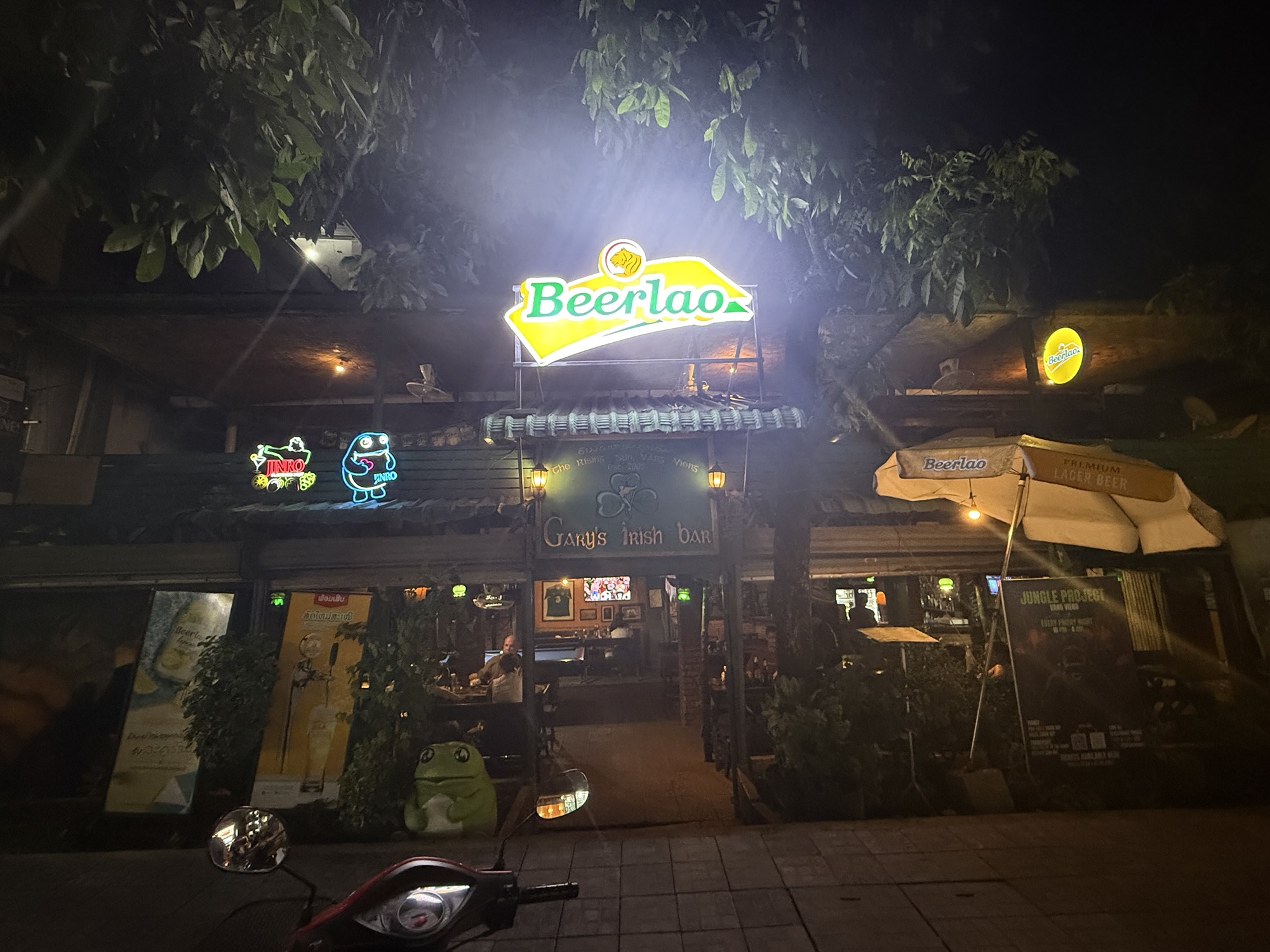
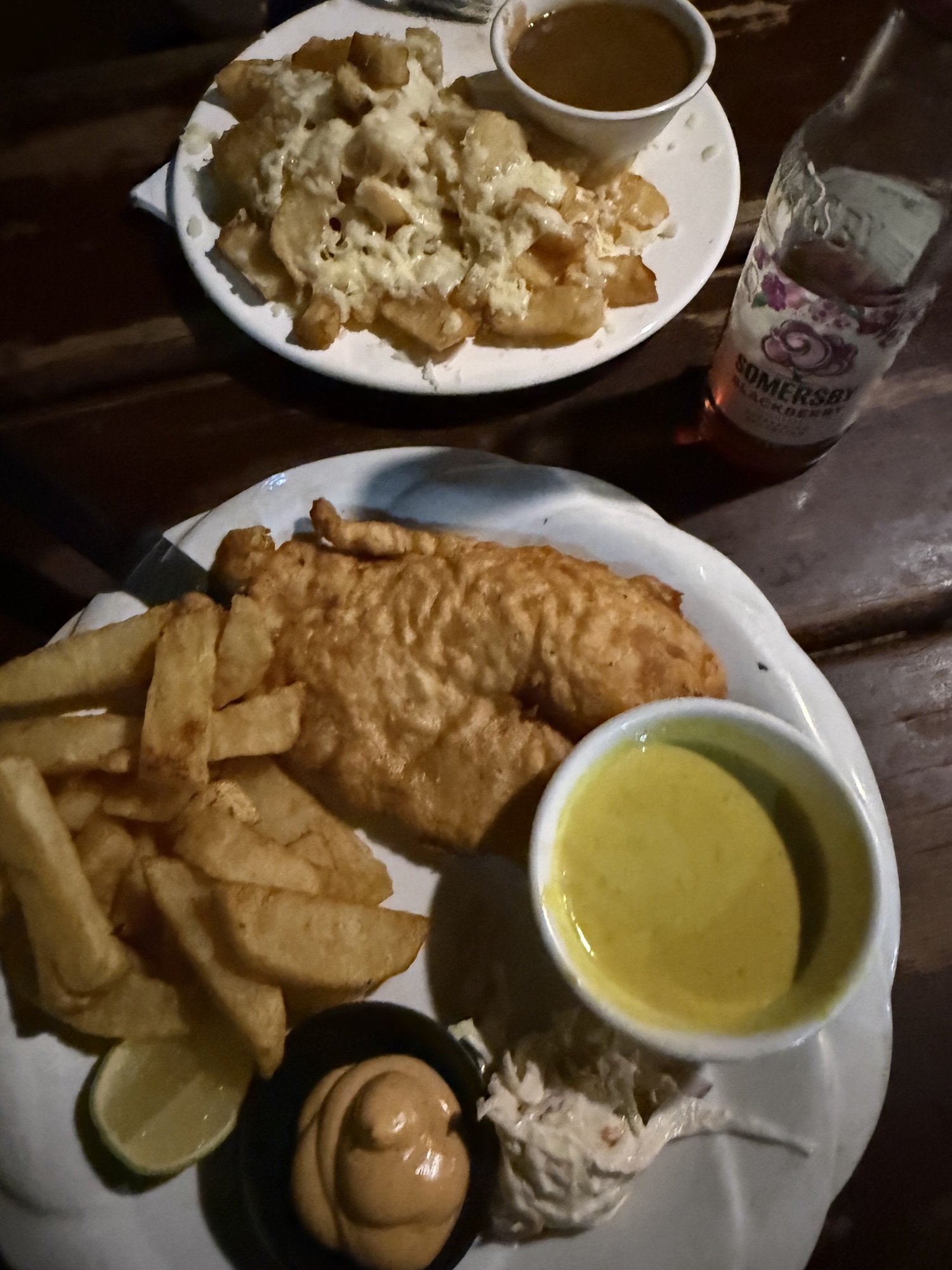
That evening, we set out in search of dinner but unexpectedly stumbled upon Gary’s Irish Pub. After weeks of eating incredible Southeast Asian cuisine, we decided an Irish meal sounded like a fun change of pace. Even better, we had the chance to meet Gary himself, making the stop even more memorable.
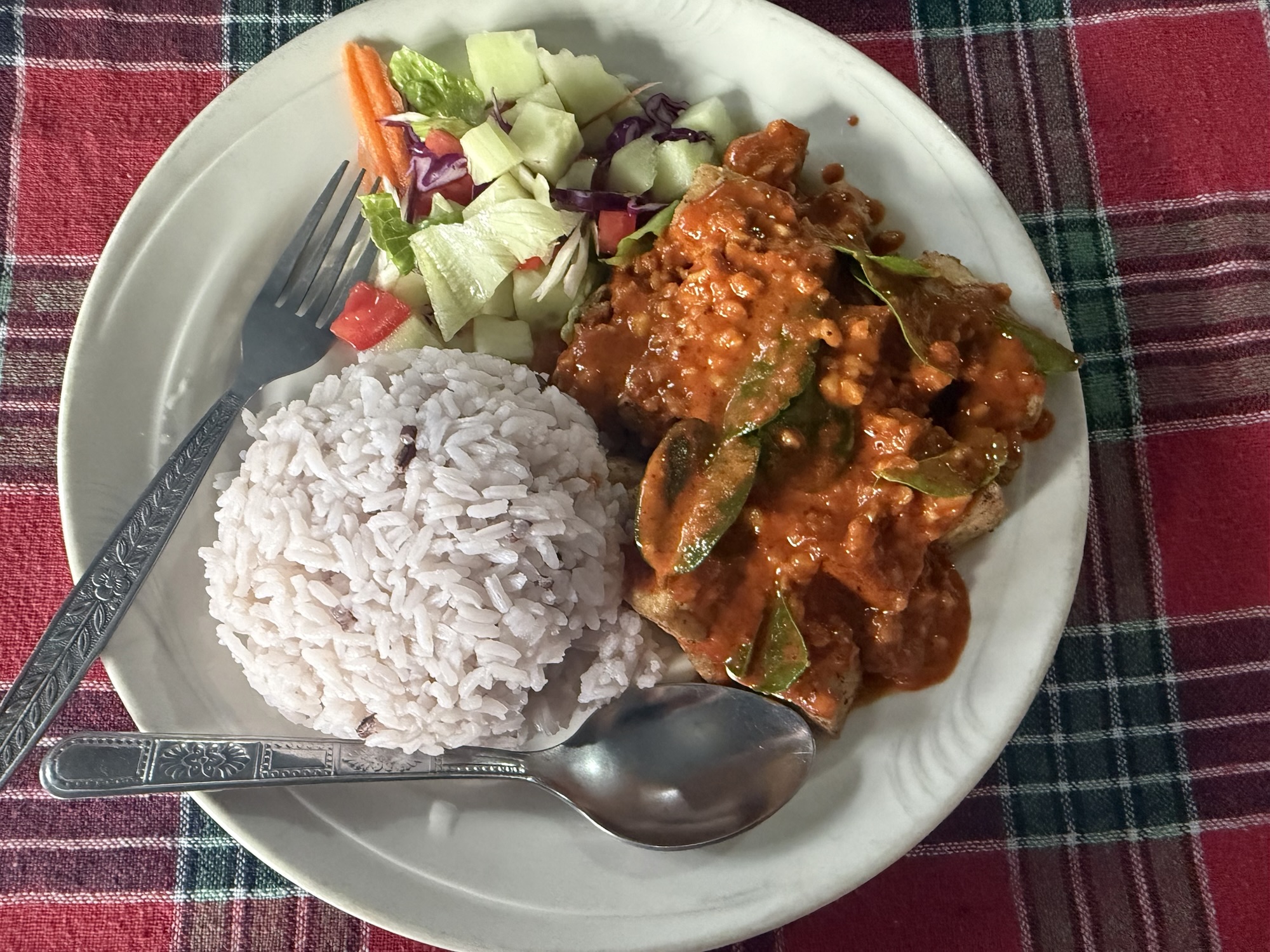
Don’t worry- we didn’t skip the local food while we were in Vang Vieng! Earlier in our stay, we enjoyed an incredible meal at a local vegan restaurant. There I had one of my favorite dishes of the entire trip: tofu peanut satay. I’m still dreaming about that meal.
After dinner, we wandered through the night market, where stalls sold clothing, souvenirs, and local street food beneath strings of lights. It was quieter than many of the other markets we visited throughout Southeast Asia. This was likely because the day’s rain had kept many visitors away and some vendors were already packing up for the evening. Even so, I always enjoy strolling through local markets. They’re one of the best places to get a feel for everyday life and soak up the atmosphere of a destination.

Other things to do in Vang Vieng
Although rain kept us from trying many of Vang Vieng’s most popular activities, they’re worth considering if you have more time or better weather.
- Floating or kayaking along the Nam Song River
- Tubing (the activity that originally made Vang Vieng famous)
- Hiking to viewpoints like Nam Xay, Pha Ngern, or others overlooking the valley
- Visiting multiple Blue Lagoons scattered throughout the countryside
- ATV and motorbike loops through rural villages and rice fields
- Ziplining and cave tubing adventures
- Rock climbing on the surrounding limestone cliffs
With better weather, it’s easy to see how people spend several days here moving between water, viewpoints, and adventure activities. In our case, the rain meant many of those plans stayed out of reach—but it also made the quieter moments feel more relaxed and intimate.


Final Thoughts
Although our time in Vang Vieng was short, it left a lasting impression. Between the dramatic limestone scenery, peaceful cave exploration, turquoise lagoons, shifting skies, and unforgettable sunrise balloon ride, it felt like a place built entirely around natural beauty and adventure. We left feeling like we had only scratched the surface- but with some of the most memorable views of our entire trip. Our last stop in Laos was the capital city, Vientiane. Stay tuned for a blog post about that trip. Until then, thanks for reading, check out my other posts about our Southeast Asian Adventures and I’d to hear your thoughts and comments. Catch you soon!
-Catching Katie


Leave a Reply